Preliminary Results: Combining CMD and Half-Light Radii Probabilities
Objectives
After creating $P_{\text{CMD}}$ and $P_{\text{dist}}$ Collins et al. columns for Boötes 1, Palomar 13, and Willman 1, I hope to hammer out the preliminary effectiveness of the ultra-diffuse galaxy membership probabilities on UFDs as a quick peep before we implement to $P_{\text{vel}}$ term.
Results
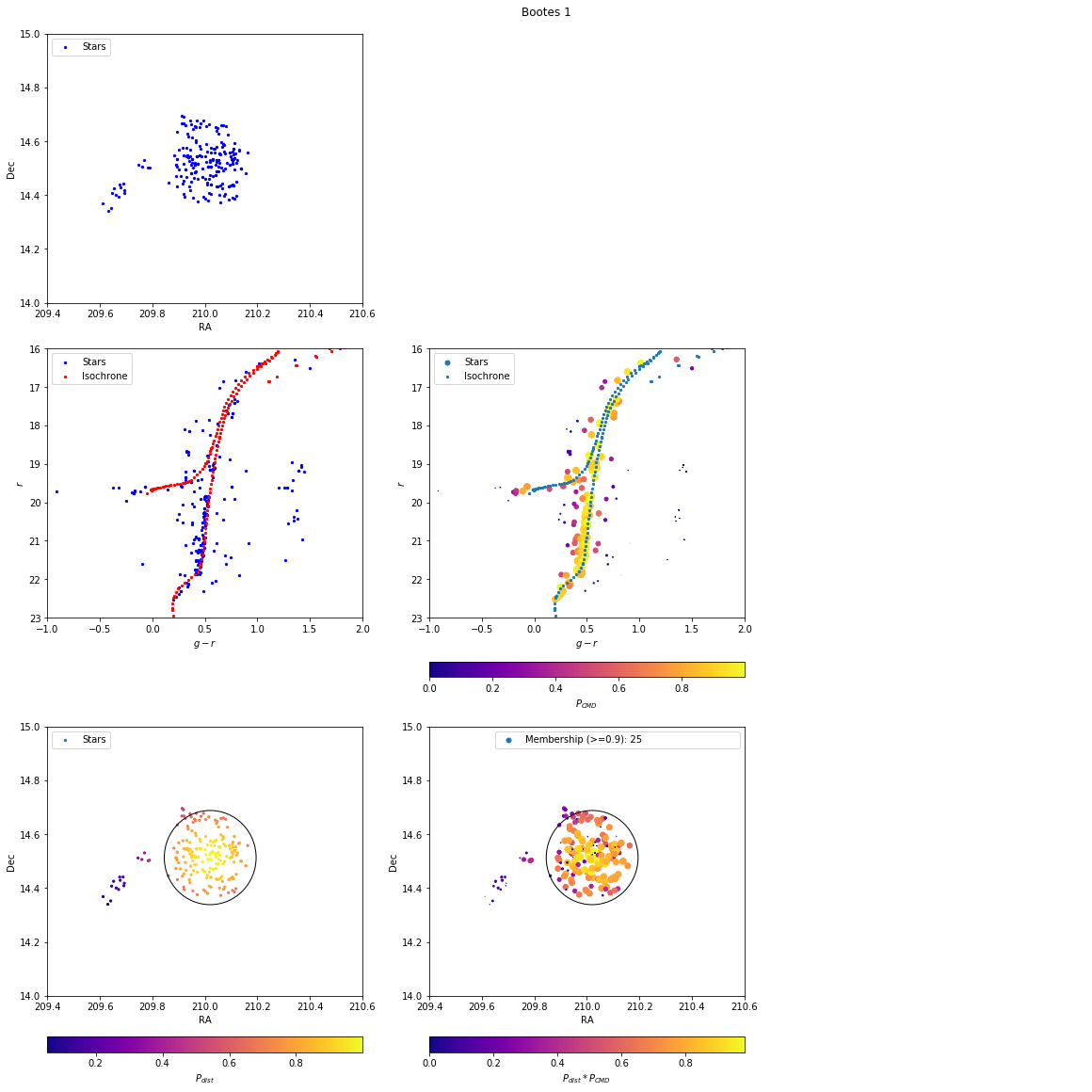
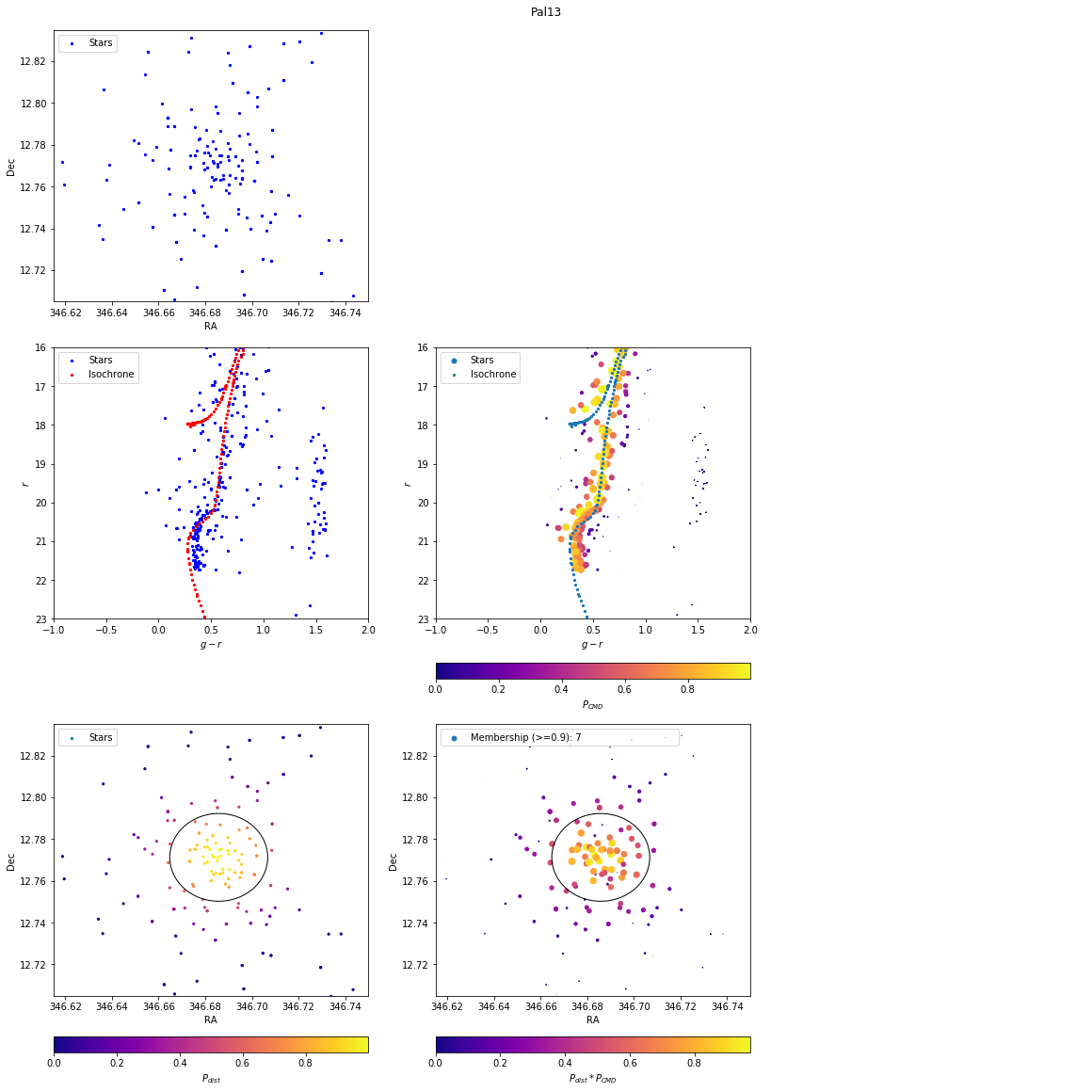
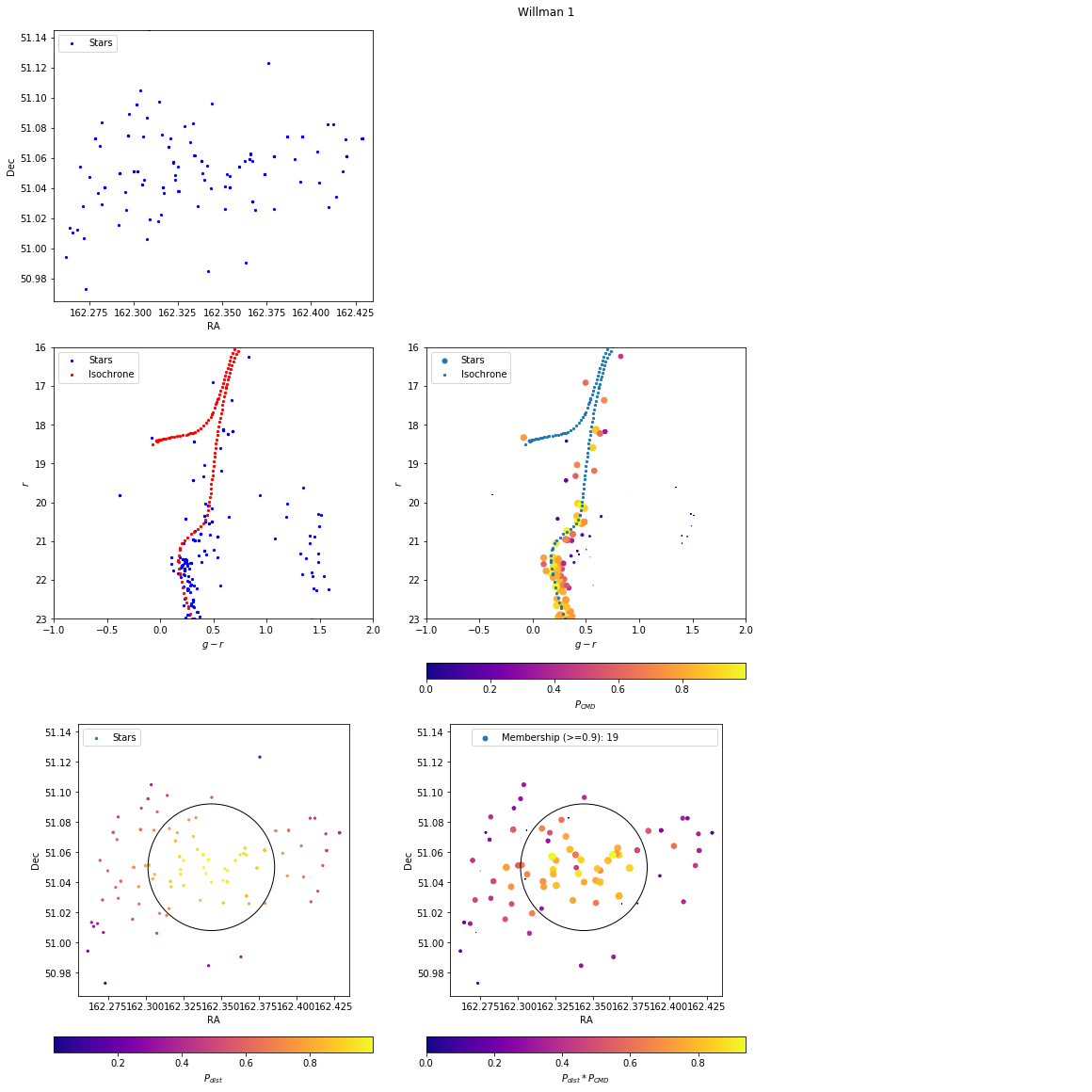
Multiplying the two columns together across Bootes 1, Palomar 13, and Willman 1, we retrive the following plots:
Bootes 1
Palomar 13
Willman 1
Another Method Explored
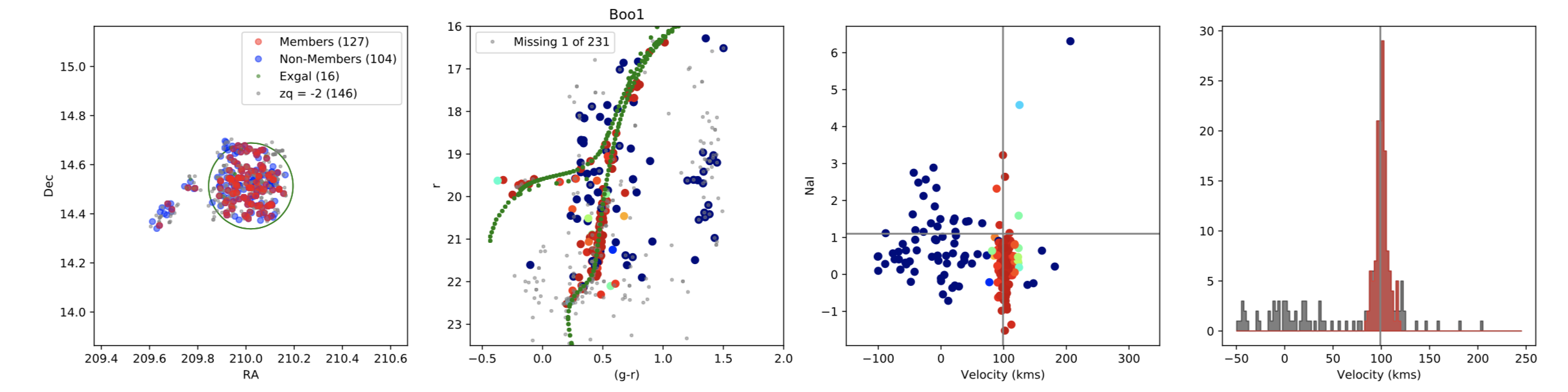
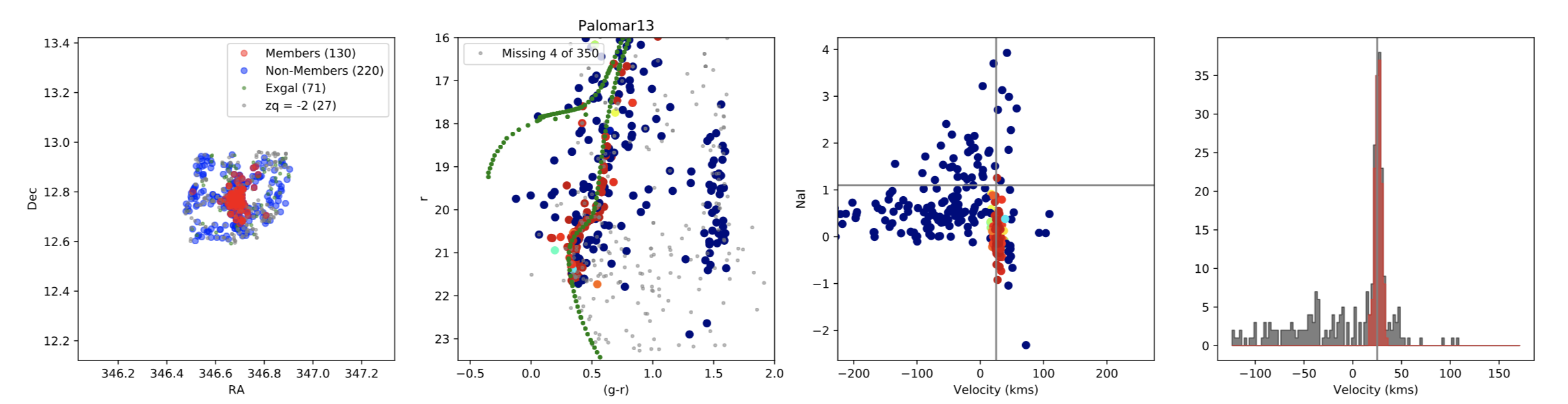
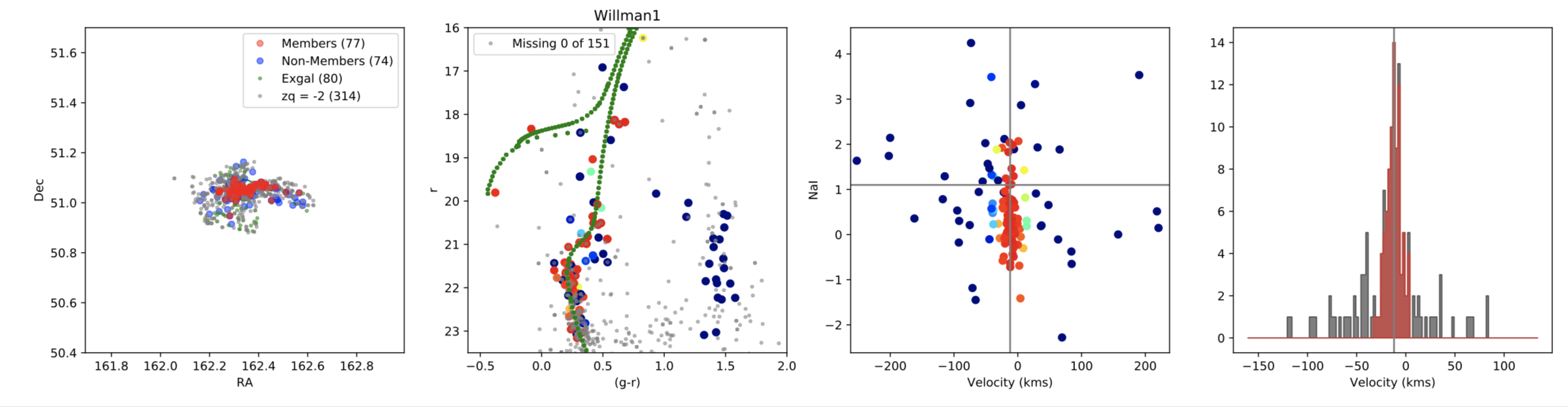
My PI Dr. Marla Geha has provided me with the plots of these three objects with their memberships using a less sophisticated membership determination pipeline.
Bootes 1
Palomar 13
Willman 1
Takeaways
It appears that the pipeline we are using in this investigation is much more selective than the less sophisticated method. It is in agreement with Collins et al. that only using spatial distance to the proximity of the center and half-light radius is not an effective gauge of contaminants. Only after integrating the $P_{\text{CMD}}$ term then we can see contaminants present within the radius, which also allows for some visual overlap in the sophisticated and less sophisticated methods in their determined members.